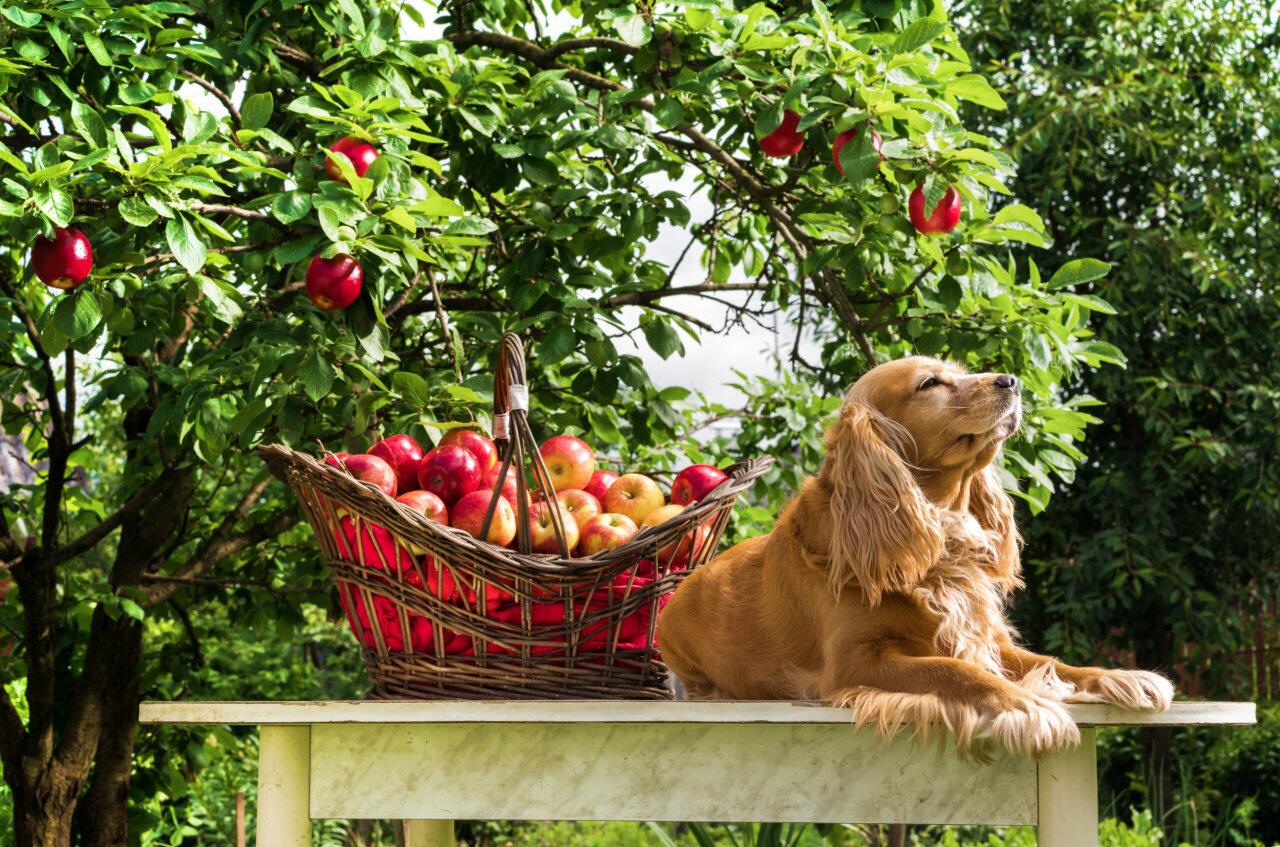
We have selected various types of fruits that are popular in the Czech Republic for you. We didn’t even dare to compile a complete list; there are certainly other types that you might think of! Every dog is an individual, so if you are unsure whether the fruits we recommend might be unsuitable for your furry friend, it is best to consult a veterinarian who can help you with your dog's individual needs.
Answer: Dogs can eat bananas in moderation.
Warning: Never give your dog a banana peel.
As for bananas, the great nutritional benefits apply to both owners and their furry companions. A serving of this yellow treat contains a good dose of fiber, vitamin A, vitamin C, and potassium. Just like with any food, too much of a good thing can ultimately be bad. This is especially true for dogs and bananas, because if your pet overindulges in this exotic fruit, it may have trouble getting relief – yes, it can become constipated! So keep an eye on them. Bananas should be a nice treat, not a main ingredient in your dog's lunch.
Answer: Dogs can eat apples in moderation.
Warning: Never give your dog the stem, seeds, or core of the apple.
Sliced apples are a healthy and tasty treat for most dogs. This fruit, one of the most popular in the Czech Republic, is full of phytonutrients, vitamins A and C, minerals, and antioxidants. It also contains a lot of fiber, which is beneficial for digestion. You can give apples with the skin, but avoid the seeds, core, or stem. These are toxic when chewed and can cause problems in larger amounts.

Answer: Strawberries are safe for dogs.
Warning: Only give your dog clean, fresh strawberries.
Another flavor bomb that is also very nutritious for both people and canines. Just be careful to wash the strawberries well and remove all parts of the stem and leaves. After that, nothing can stop you from giving your dog a delicacy full of fiber and antioxidants. You can also mash them or turn them into puree, especially if you have a small pet for whom a whole strawberry would be too big of a bite.
Answer: Peaches are safe for your dog.
Warning: Remove the pits and only give your dog the flesh.
The flesh of the peach is a delicious treat for your furry friend. Again, be cautious of the pits, which contain toxic substances. A pet would have to eat a lot of them for it to be dangerous, but the greater health risk from the pit comes from much simpler reasons, namely the risk of choking and irritation or blockage of the digestive tract. If you are careful with the pit, a peach is an excellent choice for your dog.
Answer: Dogs can eat oranges in moderation.
The possibly favorite fruit for citrus fans can also be a relatively healthy treat for their pets. Like most types of fruit, oranges can contain high amounts of sugar, which is generally not the best for health, especially if the dog suffers from diabetes. Be careful not to overdo this orange citrus, even if your pet is healthy. One or two slices are enough to see if the orange causes any stomach complications. Some dogs may be irritated by citrus fruits. Another thing you don’t want is for your dog to swallow the orange peel, so keep the fruit bowl out of reach.
Answer: Blueberries are safe for your dog.
This small forest fruit is excellent for your dog’s health, just as it is for yours. It is no coincidence that blueberries are considered one of the most powerful superfoods almost everywhere. This blue-purple wonder is full of antioxidants and nutrients that your furry friend may be missing in their diet. Along with fiber and a large dose of vitamins A, B, C, D, E, and K! Blueberries are also suitable for dogs because of their size. The berries are pleasantly small to serve as a healthy treat, and you don’t have to cut anything.

Answer: Grapes and raisins are dangerous for your dog.
Very popular fruit among owners has unfortunately proven to be very dangerous for dogs. The exact reasons are still largely shrouded in mystery, but grapes and raisins have a proven link with numerous cases of organ failure in animals, particularly kidney failure. Symptoms of kidney trouble in dogs include vomiting, diarrhea, loss of appetite, depression, or weight loss. If your dog eats grapes and shows no negative effects, it may be resistant to their negative effects and able to digest them. But that’s not a reason to give them again; enjoy this small fruit just for yourself and exclude your pet from it.
Answer: Dogs can eat cranberries in moderation.
This superfruit is very interesting to mention just because perhaps few people have thought of giving it to their pets. If you have ever tried cranberries in raw or dried form (only that type should you offer to your dog), you know they are quite tart. So your pet may not enjoy them much either. So why are we writing about them? Owners find that cranberries help with certain health issues, especially urinary tract infections. The same applies to dogs' and cats' urinary systems! Especially for cats, cranberries can come in handy, as they suffer from these health complications more often than dogs. It is, of course, ideal to consult a veterinarian first and also not to overdo the quantity, otherwise you may experience side effects. Also, be cautious of berries that come from a mixed bag. They could contain remnants of other ingredients that are unsuitable or even toxic to dogs, such as raisins or certain nuts.
Answer: Cherries are safe for your dog.
Warning: Do not give your dog the stems, pits, or leaves of cherries.
If you were to ask whether you can give your dog a cherry, the answer could be both "yes" and "no." The flesh is indeed healthy and good for the pet, but the opposite is true for the rest. Stems, pits, and leaves contain poisonous cyanide, which is very dangerous for dogs (and also for people, but in larger amounts). Moreover, the pits are small and could be accidentally swallowed, causing intestinal blockage or other digestive issues. So be careful with this otherwise beneficial and tasty fruit.
Answer: Dogs can eat raspberries in moderation.
If you have a garden with raspberry bushes that your dog has free access to, you may have noticed that he sometimes helps himself to a raspberry. Some dogs like to treat themselves to a bit of small fruit, and there’s nothing wrong with that, but especially with raspberries (and currants, see below!), you should monitor it to some extent. While they are also packed with nutrients and vitamins, they are only beneficial in small amounts. They contain xylitol, a natural sugar that can be dangerous for pets in larger doses. No negative health effects of this substance have been proven in humans, but in dogs, its consumption can lead to liver disease or hypoglycemia. On the other hand, raspberries can be great for older dogs suffering from joint inflammation, as this garden fruit has strong anti-inflammatory effects.
Answer: Currants are dangerous for your dog.
Another garden fruit that a dog might be able to "pick" for himself. He might, but he shouldn’t, so be careful. Currants have similarly high toxicity as grapes and raisins, and while some dogs can digest them, they can be toxic for others. So better to say a big no!
Answer: Dogs can eat pears in moderation.
Pears serve as a favorite treat for many dogs. They are healthy and full of vitamins A and C, as well as fiber that helps with digestion. A pear can be conveniently sliced and taken for a walk as a reward, but please don’t overdo it, as it contains quite a bit of sugar. Therefore, completely avoid pickled pears (as well as other canned fruits).
Answer: It’s complicated.
Yes, although not everyone knows, the tomato is classified as a fruit. And it is an example of a fruit that you may like in any way, but your dog should ideally avoid it. The tomato contains, just like raw potatoes, solanine, which can be dangerous for pets. It mainly concentrates in the stems and leaves, but is also found in significant amounts in unripe fruits. It can cause gastrointestinal irritation or negatively affect the central nervous system. The dog may then experience muscle cramps, loss of movement coordination, or overall weakness. Therefore, if you grow this fruit in your garden, be very careful that your dog does not taste the unripe fruits or stems. Even ripe tomatoes are not entirely safe, so it is best not to give them to your pet.
Perhaps you were missing another sweet fruit, a favorite treat of pet owners, namely watermelon. We did not include it intentionally because watermelon is classified as a vegetable, not a fruit. But since we are on the subject, we can mention it. Watermelon is safe for dogs. In addition to being great for hydration, it also contains a number of vitamins and minerals. Just like with other fruits, remove the seeds before serving and don’t let the dog chew on the green rind.
You can read more articles on our blog!


